

While working on a piece about RTP, I came across a fascinating project offering games with a 100% return to player. And although it’s an offshore crypto casino mainly targeting European markets, the idea and positioning were intriguing enough to deserve their own article.
Introduction
Every casino makes money through its mathematical edge. In roulette, the house keeps 2.7% of every bet; in blackjack, around 0.5%; and in slots, anywhere from 1% to 10%. Given enough spins, the house edge does its job.
But what if a game had zero edge? What if the casino and the player were truly on equal footing, with no built-in advantage? It sounds crazy, but it might be the next big thing.
How RTP Works in Slot Machines

RTP — or Return to Player — is one of the most important metrics in gambling. It’s essentially a built-in commission that you pay for the privilege of playing. When you bet $100, part of that wager goes to the casino and the rest theoretically returns to players over time.
The crypto casino declaring war on the industry itself.
Duel casino positions itself as the first casino that cares, offering games with a house edge as low as zero.

For all other games, Duel redistributes half of its profits back to players through rakeback. A slot with 96% RTP effectively becomes a 98% RTP game. These conditions are either going to reshape the entire market — or bankrupt the project.
Ossi “Monarch” Ketola
Ossi Ketola, known online as Monarch, is a Finnish entrepreneur. His first venture, CSGOEmpire — a CS:GO skins betting site — is reportedly valued in the hundreds of millions, with an estimated €1 billion in annual turnover. For context, the entire CS:GO item market is worth about €5.2 billion.
That success gave Monarch the bankroll to play big. In 2024 he entered the high-roller poker scene — Triton and WSOP — earning attention for his bold play and eccentric persona. Within a year, he amassed $4.7 million in live tournament winnings, including $2.97 million for a runner-up finish at Triton Monte Carlo.
But his loudest moment came in 2025, when he launched the Monarch Millions — a series of heads-up poker duels against some of the game’s biggest names. The highlight: a six-match showdown against Dan “Jungleman” Cates, with stakes escalating from €1 million to €6 million each. It became the most expensive match in poker history. Ketola lost four of the six duels, down roughly €15 million, but the publicity was enormous.
Duel.com is a natural continuation of his ambitions. Ketola acts as founder and visionary, aiming to “purify gambling” on his own terms.
“I built Duel out of hate, despise and revenge towards the bad actors. And out of love and care for the retards and degenerates. The world needs Duel as much as junkies need pure meth instead of shit laced with fentanyl. I’ve been in this space for a long time, and I’ve been utterly disgusted by everything in it. The scamming, the rigging, the fake marketing, the lack of authenticity. Nobody really gives a fuck except about squeezing money out of users. Duel is the antidote. Duel is a declaration of holy war. Duel is a crusade.” — Ossi Ketola
A multi-billion-dollar gray market known as sweepstakes casinos

Every month, millions of Americans play online casino games, wager real money, and win real cash. Officially, though, these platforms aren’t classified as gambling — they’re labeled as “social games.” We’re talking about sweepstakes games.
Launch
Duel.com went live in fall 2025 and quickly gained traction. The project leveraged CSGOEmpire’s loyal community, which embraced Duel as a movement for honest gambling. Ketola regularly engages with players through Discord, X, and Kick streams, cultivating the image of a crusader fighting industry corruption.
The rhetoric resonates with younger gamblers tired of conventional online casinos. For them, Duel is not just a casino — it’s a manifesto.
By October, the site captured 4.69% of the crypto gambling market, with over $1441 million in deposits.
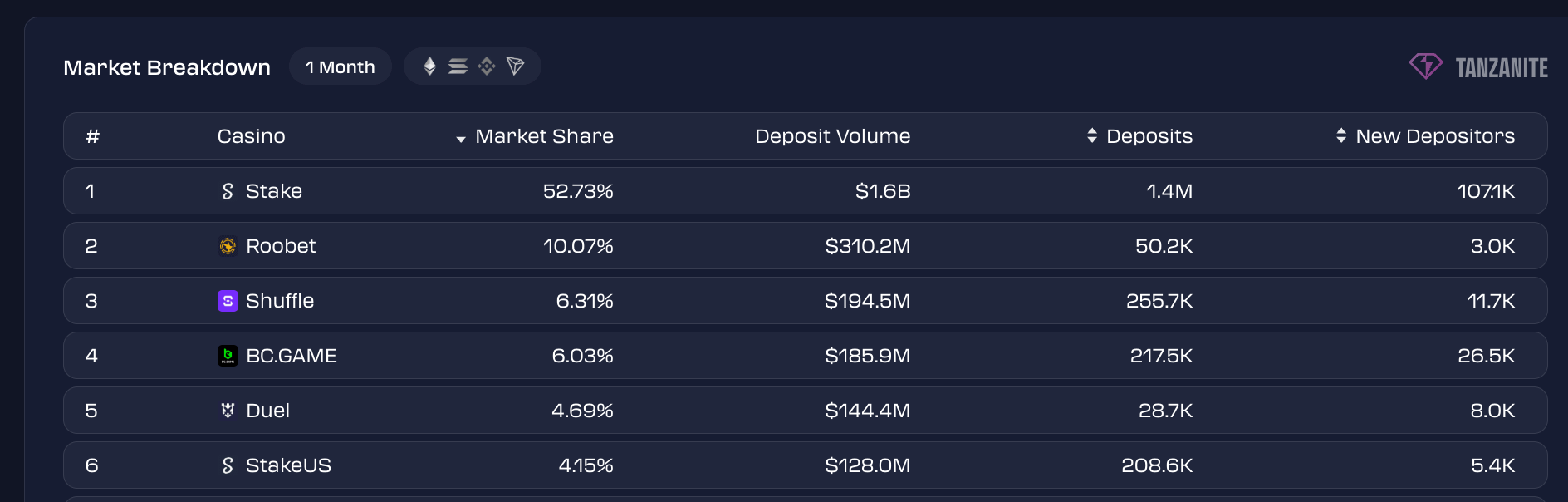
According to Ketola, the project’s rise triggered attacks from competitors. His personal X account, along with @duel’s official profile, was banned without explanation — just after announcing the 100% RTP games. He urged the community to “sound the alarm” and spread Duel’s message despite the bans, vowing that traditional crypto casinos would lose billions because of Duel.
“We are under attack. My Twitter account along with Empire’s and Duel’s have been banned.”
In Discord, he posted about “COVID poisoning” and attempts to silence him, accusing rival casinos of smear tactics.
“The waves of attacks from competitors seem to not be slowing down… They’re spreading fake videos, screenshots, chatlogs — anything to hurt our reputation. Luckio and other casinos sponsor armies of Twitter influencers accusing me of being everything from a scammer to a pedophile, with zero evidence. It’s insane.”
Financially, Ketola claims he has enough reserves and outside investment to sustain Duel even with minimal profit. Yet, by his own admission, he’s unsure whether the project will ever make money.
“I don’t know if this will make money. I think it probably will, and I hope so — but that’s not the main point. For the most part, this is a passion project.”
That kind of honesty makes some players nervous — after all, it’s a casino openly admitting it might not be profitable.
Games and Rakeback
As mentioned, Duel’s main edge (or lack thereof) lies in its 0% house edge games and 50% rakeback policy. On exclusive 100% RTP games, there’s naturally no rakeback — the casino makes nothing on them to begin with.
“Our slots are still better than the competitors. Fundamentally it’s the same game with the same odds, but we give you rakeback worth 50% of the house edge paid.”
On paper, this is the most player-friendly deal in the market. You can play the same slot elsewhere at 97% RTP — or play it here and effectively get 98.5%.
The platform features several exclusive games with 100% RTP — meaning the casino makes nothing on them. These games use a provably fair system2, allowing anyone to verify that every result is generated randomly and without manipulation.
Duel also rejects traditional casino bonuses, which Ketola considers psychological traps exploiting sunk cost fallacy. That choice conveniently eliminates bonus hunters and +EV players — speeding up withdrawals and reducing abuse.
Casino VIP Programs: Loyalty Rewards or Money Trap?

Gamblers worldwide lose over $500 billion a year. In the US alone, that figure exceeds $72 billion, with $25 billion coming from online betting and casinos.
Operations and Infrastructure
Beyond the high rakeback, Duel hosts exclusive hourly, daily, weekly, and monthly tournaments with massive prize pools — from $50,000 hourly to $5 million monthly. These tournaments are presumably funded by the house edge on regular provider slots, where the casino still earns its cut. However, a prize structure where the winner takes 50% of the entire pool may raise some eyebrows.
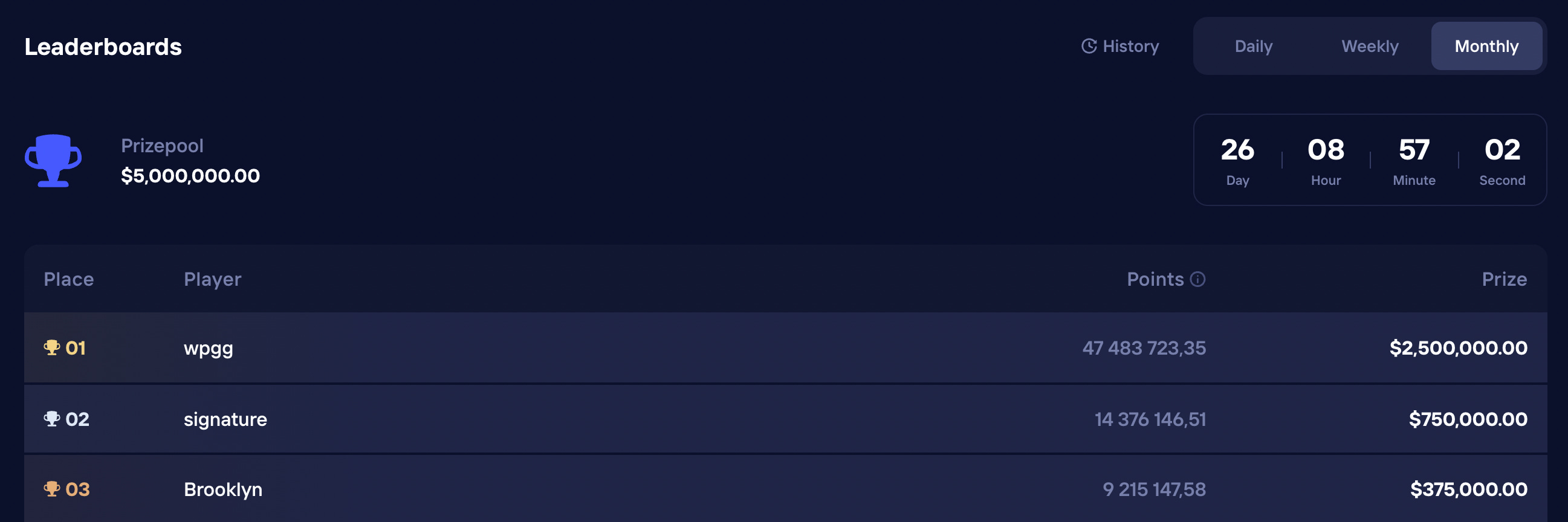
The site operates under an Anjouan license, which allows anonymous crypto deposits and withdrawals. This gives players privacy and convenience, but also means minimal responsible gambling oversight. Duel positions itself as an honest casino with the best conditions for players, yet operates under a weak offshore license that provides few safeguards for vulnerable players. I was able to deposit $7,000, play, and withdraw it back without any verification or documents3.
Duel.com features a global community chat — completely open, with no control or moderation. The result is a toxic atmosphere, a kind of digital Wild West where the ideal of absolute freedom has come at the cost of any semblance of civilized conversation.
Marketing and Influencers
Duel’s approach to marketing breaks sharply from industry norms. Unlike competitors that pay A-list names like Drake or Snoop Dogg, Duel hasn’t hired celebrity ambassadors. Ketola openly condemns “fake bet” streams, where casinos hand influencers fake balances for show.
“One thing I really hate is the fake-bets meta. Pretty much all top crypto casinos do it. They hire manchild actors screaming at the camera, pretending to win big even though it’s all fake.”
Instead, he personally engages with the community on Kick and Discord, seeking like-minded influencers who share Duel’s values. To many followers, Duel feels more like a mission than a business — a war against deception in online gambling.
“We hate most gambling influencers with a passion. But we’re looking for gigabased creators who vibe with our mission and align with our brand. Reach out.”
Conclusion
Estimates suggest Duel holds tens of millions in liquid assets — enough to sustain its aggressive pricing strategy for quite a while. The project may be adopting a blitzscaling model: attract users first with unbeatable terms, figure out monetization later.
If Duel manages to grow and retain its player base without collapsing under 0% edge, 50% rakeback, and multi-million-dollar tournaments, it could force the entire industry to rethink its margins.
You might also like:
The site tanzanite.xyz/analytics tracks crypto casino deposits by identifying public wallets and monitoring incoming transactions. It provides data on total deposit volume, number of deposits, number of unique depositors
Provably Fair — a cryptographic verification system used by some crypto casinos that allows players to confirm game results weren’t manipulated. The casino provides a hashed server seed, the player provides a client seed, and a nonce tracks each bet. After each round, the casino reveals the unhashed server seed so players can verify the outcome was genuinely random.
I didn’t have to go through KYC or SOW procedures, and while this is very convenient and personally makes me happy, instead of me it could have been a teenager or a player gambling their last money. Although this is a problem across the entire industry, not specific to this site.